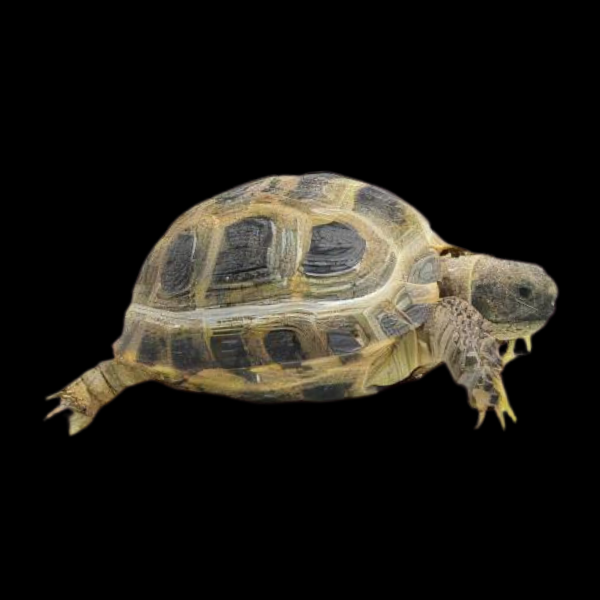
Horsefields Tortoise Testudo Horsfieldii Juvenile
$ 46.54
Description Horsefield’s Tortoise Scientific Name: Testudo horsfieldii Common Names: Russian Tortoise, Horsefield’s Tortoise Overview The Horsefield’s Tortoise (Testudo horsfieldii), also known as the Russian Tortoise, is a small species of tortoise native to Central Asia, including parts of Russia, Iran, and Afghanistan. It is a hardy, active tortoise that is popular in the pet trade due to its manageable size, relatively easy care requirements, and gentle temperament. Horsefield’s Tortoises are terrestrial herbivores, thriving in environments that offer plenty of sun, space to roam, and a variety of vegetation. They are an excellent choice for both beginner and experienced tortoise owners. Key Information Size: 6–8 inches (15–20 cm) Weight: 2–3 pounds (0.9–1.4 kg) Lifespan: 40–50 years (with proper care) Diet: Herbivore Temperament: Calm, gentle, and inquisitive Habitat & Setup Habitat: Native to dry, rocky, and semi-desert regions of Central Asia. Horsefield’s Tortoises are adapted to living in areas with low vegetation, rocky outcrops, and warm temperatures. Outdoor Enclosure Size: Minimum 4–6 feet (1.2–1.8 meters) in length for a single tortoise, with larger enclosures recommended for multiple individuals. Substrate: Natural soil, sand, and fine gravel. Avoid cedar or pine wood shavings, which can be harmful to tortoises. Shelter: Provide shaded areas to escape the sun during the hottest parts of the day, as well as a secure place to sleep. Climate: Prefer warm, dry conditions with daytime temperatures ranging from 75–85°F (24–29°C) and nighttime temperatures around 65–70°F (18–21°C). Avoid exposure to cold temperatures below 50°F (10°C). Humidity: Low humidity is ideal for Horsefield’s Tortoises, but they should have access to a shallow water dish for drinking and occasional soaking. Diet & Feeding Diet Type: Herbivore Suitable Foods: Leafy greens such as dandelion greens, collard greens, and kale Weeds like plantain, clover, and thistles Flowers such as hibiscus and dandelions Vegetables like squash, carrots, and bell peppers in moderation High-fiber grasses and hay Feeding Frequency: Offer fresh food daily, including a variety of greens and other vegetables. Ensure that the diet is high in fiber and low in protein to prevent health issues. Care Notes Activity Level: Horsefield’s Tortoises are active, especially during the warm daylight hours. They enjoy grazing on vegetation and exploring their environment, so providing an enriched habitat is important for their well-being. Health: These tortoises need a varied, balanced diet to maintain healthy growth. Calcium supplements are often required to ensure strong bones and a healthy shell. Social Nature: Horsefield’s Tortoises are generally solitary creatures, though they may tolerate other tortoises in larger enclosures. However, males can become territorial and may exhibit aggression towards other males, especially during mating season. Hibernation: In their natural habitat, Horsefield’s Tortoises undergo a period of hibernation in the winter. If kept outdoors in cooler climates, it’s essential to allow them to hibernate. For indoor tortoises, a cooling period may be necessary, but it’s important to consult a veterinarian for guidance on proper hibernation care. Conservation Status Conservation Status: Vulnerable (IUCN Red List) Threats: Habitat destruction and over-collection in the wild Conservation Efforts: While Horsefield’s Tortoises are protected in many areas, their populations are still threatened by illegal capture and the destruction of their natural habitats. Breeding programs are in place in some zoos and wildlife centers to help ensure the survival of the species in captivity. Fun Fact Horsefield’s Tortoises are one of the smallest species of tortoises, making them ideal for owners who want to keep a tortoise but don’t have the space for larger species like the Aldabra or Sulcata Tortoises. Despite their small size, they have a long lifespan, and some individuals can live for several decades with proper care.